




Crypto mining has long been one of Russia’s most talked-about digital industries, largely because of its energy landscape, industrial capacity, and regions where cold weather and relatively affordable electricity make mining operations efficient. For years, a significant share of mining activity operated in a gray zone—sometimes tolerated, sometimes targeted, often left to regional enforcement and power providers to manage. But that era is rapidly closing. Unregistered crypto mining in Russia may soon come with up to 2 years of forced labor, according to proposed amendments discussed in recent reporting that cite Russian officials and Interfax coverage.
This development is not just a routine regulatory update. It signals a stronger commitment to formalizing the mining sector through registration, taxation, and enforcement. Russia has already moved toward legalized and regulated mining frameworks, requiring miners to register with the Federal Tax Service and comply with rules meant to separate legitimate industrial activity from illegal electricity usage and tax evasion. Now, authorities appear ready to attach sharper criminal and administrative penalties to those who remain outside that system.
What makes this moment significant is the language being discussed: compulsory or forced labor for up to two years, and potentially further penalties depending on scale and repeat offenses. If implemented, these measures could reshape how miners operate in Russia, reduce informal “home mining” and unlicensed industrial farms, and push the industry toward official registries and compliance structures. It could also impact global hash rate distribution and the economics of mining, especially if enforcement becomes consistent in high-mining regions.
In this article, we’ll break down what “unregistered” means in practice, why Russia is tightening enforcement, how the proposed forced labor penalty fits into broader policy goals, and what the future likely holds for miners, investors, and the global crypto ecosystem. Along the way, we’ll explore related crypto regulation, mining registry rules, electricity theft enforcement, and the growing role of state oversight in digital industries.
What “Unregistered Crypto Mining in Russia” Means in the New Framework
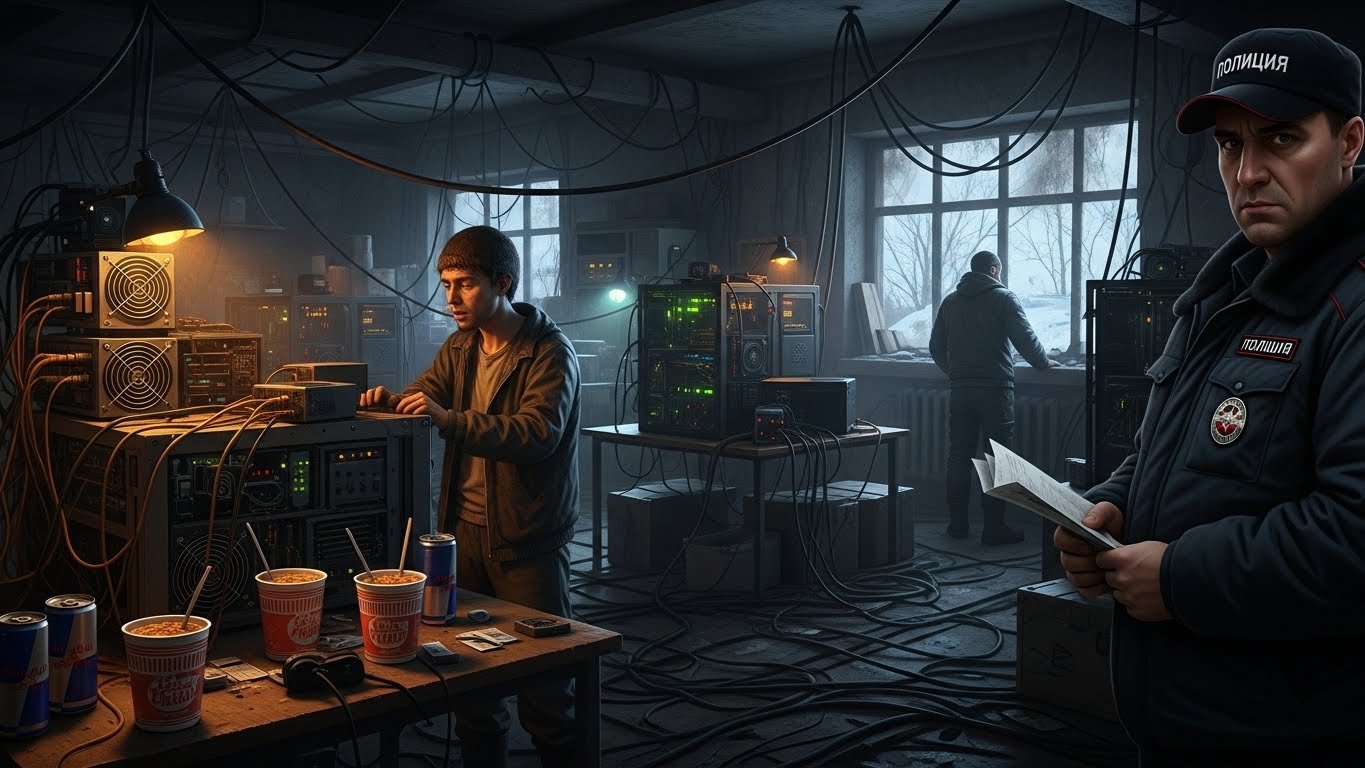
To understand why unregistered crypto mining in Russia may soon come with up to 2 years of forced labor, it helps to clarify what the state is actually targeting. Russia has been building a legal structure that distinguishes between mining as a regulated industrial activity and mining as an unauthorized use of electricity resources or unreported economic activity. Legal mining, under the new model, implies registration, tax reporting, and compliance with regional restrictions.
The registration element matters because mining is not only a technical process; it’s an economic activity producing a valuable digital asset. Governments typically treat it as taxable income or industrial production. In Russia’s case, the requirement to register with the Federal Tax Service is a central mechanism for tracking mining businesses and bringing them into the formal economy.
Unregistered crypto mining in Russia, therefore, generally refers to operations that mine without being listed in the official registry or without complying with reporting requirements. That category can include large industrial mining farms operating quietly in warehouses, small businesses running miners under commercial tariffs while masking consumption, or individuals running rigs in residential settings where electricity infrastructure was never designed for such constant load. In practice, authorities often associate unregistered mining with three risks: tax evasion, electricity theft or tariff abuse, and local grid strain. Those risks are key to why the government is escalating its approach.
Why Registration Has Become a Central Enforcement Tool
Registration is not just bureaucracy; it’s how a government turns an informal industry into a controllable sector. When miners register, the state can estimate hash rate capacity within its borders, tax mining income, enforce equipment rules, and apply regional restrictions where electricity grids are stressed. Russia has also explored broader monitoring tools, including registries of mining equipment and measures tied to energy consumption data. These systems allow regulators to draw a simple line: if you’re registered, you’re operating legally; if you’re not, you are exposed to enforcement. That line becomes much sharper when criminal penalties enter the picture.
Why Russia Is Cracking Down: Energy, Taxation, and Grid Stability
Russia’s tightening stance on unregistered crypto mining is not happening in isolation. It’s part of a wider attempt to manage energy resources and stabilize regional power systems. Mining is electricity-intensive by design, and the strain is especially severe when mining clusters in regions where infrastructure is outdated or where local demand already pushes capacity.
Reports over the last year have repeatedly highlighted the scale of unregistered activity and the concern that a majority of miners may still be operating outside official rules. This creates a difficult reality for policymakers: if most mining is unregistered, the state loses tax revenue, grid operators face uncontrolled load, and law enforcement sees increasing cases of illegal hookups and power theft.
Crackdowns are also politically easier when framed as protecting public infrastructure. When residents experience outages, rising tariffs, or reduced grid reliability, enforcement against illegal mining can be justified as a public service, not an anti-crypto campaign.
The Grid Issue: Why Mining Becomes a Regional Crisis
Mining load is not like normal household electricity usage. It is continuous, heavy, and often concentrated. If a region’s grid was built for seasonal residential use and normal industry, thousands of rigs running 24/7 can push transformers and distribution networks into failure. This is one reason Russia has explored regional restrictions and measures aimed at controlling mining where energy deficits exist. Recent reporting has referenced mining bans or moratorium-like measures in certain regions, reflecting how energy policy and crypto mining policy are now intertwined. Forced Labor for Unregistered Mining
The headline issue is straightforward: unregistered crypto mining in Russia may soon come with up to 2 years of forced labor. This phrasing comes from coverage describing proposals linked to amendments to Russia’s criminal code and enforcement framework, reportedly discussed in the context of unauthorized or unregistered mining activity.
In Russian legal terminology, “compulsory labor” or “forced labor” can function as a criminal punishment alternative to imprisonment, often applied in cases where authorities want to penalize without full incarceration. The proposal also discusses financial penalties and the possibility of stronger criminal consequences depending on circumstances.
The significance of this is not just the punishment itself, but what it signals: the government is treating unregistered mining as a serious economic offense. It’s a message that mining is now considered a regulated sector, and operating outside the rules is being pushed toward criminalization rather than administrative fines alone.
Why Forced Labor Becomes Part of the Policy Toolbox
When a government introduces forced labor as a possible penalty, it often aims to discourage widespread low-level violations that are hard to police through financial fines alone. If penalties are only monetary, large-scale miners may treat them as a cost of doing business. By adding forced labor, the state introduces personal risk for operators, managers, and potentially those enabling illegal operations. It also increases the psychological impact of enforcement. Even if the maximum penalty is rarely applied, the existence of the penalty changes behavior and encourages compliance.
How Enforcement Might Work: From Power Monitoring to Equipment Seizure
A key question is how Russia could enforce such a policy effectively, especially given the scale of mining activity. The answer likely lies in a mix of energy monitoring, registry cross-checking, and targeted raids on suspected illegal farms.
Authorities have already shown interest in controlling mining through registries and equipment tracking systems, as reported by multiple outlets. There have also been discussions about confiscation mechanisms, where courts could be authorized to seize mining devices and unregistered digital assets in certain circumstances. If unregistered crypto mining in Russia becomes punishable by forced labor, enforcement could expand in three directions: first, aggressive power theft investigations; second, coordination between energy firms and law enforcement; third, automated detection based on unusual electricity load patterns.
The Role of Power Companies and Regional Authorities
In mining crackdowns, power companies are often frontline actors. They detect abnormal consumption, illegal hookups, and meter tampering. Regional authorities then apply administrative measures like disconnections, and law enforcement may escalate cases to criminal investigations where theft or fraud is suspected. Regions such as Siberia have repeatedly been mentioned in mining-related enforcement stories due to high concentrations of mining activity and cheap electricity. If penalties increase, those regions could see more frequent inspections and stronger legal action against unregistered operations.
The Compliance Shift: Why Many Miners Will Move Toward Registration
If the forced labor penalty becomes law, it will likely accelerate a trend already underway: moving mining into the legal and registered economy. Russia has reportedly already seen a portion of miners register with authorities, but a significant percentage may still be operating outside the framework. (Crypto Briefing)
The forced labor proposal changes the cost-benefit calculation. For many miners, the administrative burden of registration and reporting becomes far less painful than the legal risk of being caught unregistered. This is especially true for medium and large operators, who cannot easily hide power usage and whose facilities are visible through logistics and procurement trails. The result may be a more consolidated industry, with fewer informal operators and more regulated industrial-scale miners. This could increase state visibility into the sector while also changing the competitive landscape.
What Registration Could Mean for Mining Economics
Regulated mining often comes with higher costs. Taxes must be paid. Electricity may be priced differently. Reporting and compliance add overhead. But regulation can also bring benefits: legal protection, clearer contracts, and the ability to secure financing and partnerships more easily. In other words, registration can transform mining from a risky gray-market activity into a stable industry. Russia’s push suggests it wants mining to exist, but under state oversight and formal economic control.
Implications for the Global Crypto Market: Hash Rate, Risk, and Regional Shifts
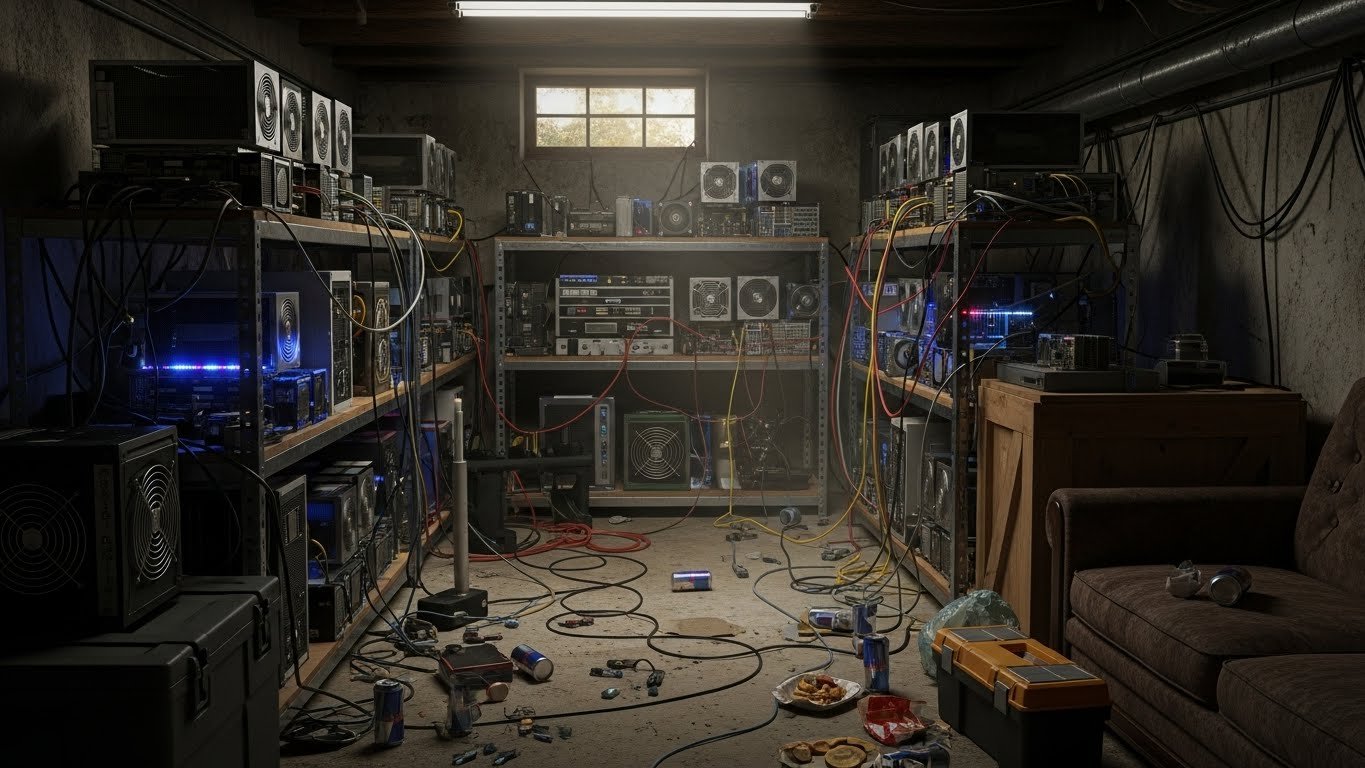
Whenever a major mining jurisdiction tightens rules, global mining markets pay attention. If unregistered crypto mining in Russia becomes riskier and less profitable, some miners may shut down, relocate, or shift operations to friendlier regions. That can affect global Bitcoin hash rate distribution and the economics of mining.
However, Russia’s approach appears less like a total ban and more like a formalization push. The goal seems to be bringing miners into compliance rather than eliminating the sector entirely. (Crypto Briefing) If that interpretation is correct, the global impact might be more about industry consolidation and transparency than about a dramatic hash rate collapse. Still, the transition could be bumpy. Enforcement spikes can cause short-term disruptions, especially if large unregistered farms are shut down quickly.
A More Regulated Mining Sector Could Increase Institutional Confidence
One irony of stricter penalties is that they can make the industry more “investable.” Institutions typically avoid sectors dominated by informal activity. A regulated mining environment with clear registration rules and enforcement can attract larger capital, more professional operators, and long-term infrastructure investment. If Russia succeeds in formalizing mining while allowing it to remain economically viable, it could become a major regulated mining hub with significant influence on the global mining economy.
The Human Impact: Who Is Most at Risk Under a Forced Labor Rule?
The headline of forced labor raises an important human question: who would actually face such penalties? In most regulatory crackdowns, the state tends to pursue the operators and organizers of large-scale illegal activity. But smaller miners could also be exposed if laws are written broadly.
In many countries, “illegal mining” cases often involve additional crimes: electricity theft, fraud, unlicensed commercial activity, or safety violations. If Russia’s proposed amendments follow that path, enforcement may focus on unregistered mining tied to serious economic harm, such as large-scale theft or damage to infrastructure. That said, even small-scale unregistered miners could feel pressure. When legal risks increase, even hobby mining starts to look dangerous if it violates local requirements or uses electricity in prohibited ways.
The Likely Focus: Industrial Farms, Repeat Offenders, and Energy Theft
Reports often highlight cases involving illegal hookups, disguised facilities, and large power loads. These are the operations most likely to be targeted because they create the biggest public and economic impact. If forced labor becomes part of the legal toolkit, it’s reasonable to expect enforcement to prioritize high-scale violations and repeat offenses, especially where miners ignore warnings, continue operating after disconnection, or engage in theft.
What Comes Next: A Tightening Cycle of Registration, Monitoring, and Punishment
Unregistered crypto mining in Russia may soon come with up to 2 years of forced labor, but the bigger story is the direction of policy. Russia is building a model where mining is legal under defined conditions, and illegal outside those conditions.
That suggests a tightening cycle. First, the government expands registries and reporting tools. Then it adds stronger penalties for those who avoid the system. Finally, enforcement becomes more systematic as monitoring improves. Reports about equipment registries and online reporting portals point toward a more data-driven oversight system. For miners, the message is clear: compliance is becoming the only viable path. For the global market, the implication is that mining is increasingly treated like an industrial sector subject to national energy policy, tax rules, and criminal enforcement—rather than a loosely regulated activity.
How This Could Influence Other Countries
Russia’s approach could influence other governments that face similar issues: electricity theft, grid strain, and tax leakage. If a major jurisdiction successfully forces miners into compliance through registries and penalties, other countries may adopt similar frameworks. This is part of a broader trend where crypto industries are moving from novelty to governance. The era of “regulation later” is ending, especially for sectors that consume strategic resources like energy.
Conclusion
Unregistered crypto mining in Russia may soon come with up to 2 years of forced labor, and that possibility reflects a broader transformation: Russia is moving from tolerance of gray-market mining toward a formal, regulated, and enforceable system. The government’s focus on registration with the Federal Tax Service, combined with reported efforts to track equipment and monitor energy usage, signals that mining is being brought under comprehensive state oversight.
For miners, the immediate takeaway is risk management. Operating unregistered is no longer simply a question of fines or disconnection. It may become a criminal exposure with severe personal consequences. For the broader industry, the shift could lead to consolidation, better transparency, and possibly a more stable mining environment for operators willing to comply.
As Russia continues to develop its mining policy, the world will watch how effective the enforcement becomes and whether regulation strengthens the sector or pushes activity underground. Either way, the message is unmistakable: the era of unregistered mining as “business as usual” in Russia is rapidly coming to an end.
FAQs
Q: Why is unregistered crypto mining in Russia being targeted with penalties like up to 2 years of forced labor?
Unregistered crypto mining in Russia is being targeted because authorities associate it with tax evasion, unauthorized commercial activity, and electricity theft or tariff abuse that damages power infrastructure. Recent proposals reported in the media describe amendments that could introduce tougher criminal penalties, including up to two years of compulsory or forced labor, to discourage miners from operating outside the official registration framework and to push the sector into legal, taxable oversight.
Q: What does “unregistered crypto mining in Russia” typically include, and does it apply to home miners too?
Unregistered crypto mining in Russia generally includes mining conducted without registering with the relevant authorities, especially the Federal Tax Service, as required under the evolving legal framework. It can include industrial mining farms running quietly without reporting, businesses hiding commercial-scale power use, and potentially even home miners if the law is applied broadly and their activity violates reporting rules or uses electricity in prohibited ways. Enforcement typically focuses more on large or harmful operations, but increased penalties raise the perceived risk across the entire spectrum of miners.
Q: How would Russia detect and enforce cases of unregistered crypto mining in practical terms?
Enforcement is likely to rely heavily on energy monitoring, power company cooperation, and registry cross-checking. Unusual electricity loads, illegal connections, and repeated grid issues can trigger inspections and investigations. Russia has also been associated with expanding monitoring tools such as mining registries and equipment tracking initiatives, which can make it easier to identify who is operating without registration and to escalate enforcement against repeat offenders or large-scale illegal farms.
Q: Could these forced labor penalties reduce Russia’s role in global Bitcoin mining, or will mining simply become more regulated?
The impact depends on how strict and consistent enforcement becomes. If large unregistered operations shut down quickly, there could be short-term reductions in hash rate from affected regions. However, Russia’s broader direction appears to be formalization rather than elimination—making mining legal under regulation and punishing those outside the system. If most miners transition to registration and compliance, Russia could remain a major mining jurisdiction, but with a more consolidated, regulated industry structure and clearer state oversight.
Q: What should miners and mining businesses in Russia do now to reduce the legal risks of unregistered crypto mining?
Miners should closely track official registration requirements, ensure that mining activities are properly registered where required, and align electricity usage with legal tariffs and regional rules. They should also document operational compliance, including power contracts and tax reporting, because enforcement often focuses on unreported income and suspected electricity theft. With proposals discussing forced labor penalties for unregistered crypto mining in Russia, the safest path is moving toward legal operation frameworks rather than hoping to remain unnoticed.
