




Ethereum developers have never been shy about long-term ambition, but the network’s recent shift toward a faster, more predictable upgrade cadence is changing how the market thinks about Ethereum’s future. Instead of waiting years for a single massive overhaul, Ethereum is moving toward smaller, more frequent upgrades that keep momentum high while reducing technical risk. That context matters because it explains why the announcement of Ethereum’s “Hegota” upgrade—slated for late 2026—feels significant even though it’s still over a year away. The timeline signals that Ethereum’s roadmap is not slowing down after recent forks; it’s accelerating, becoming more structured, and increasingly aligned with the network’s bigger vision of scalability, decentralization, and sustainability.
At a high level, Hegota is expected to follow the network’s next major upgrade, Glamsterdam, which is currently targeted for the first half of 2026. Together, they fit into Ethereum’s developing goal of a twice-yearly upgrade rhythm, making changes more incremental and easier to coordinate across clients, infrastructure teams, and the broader ecosystem. Developers have also outlined a process for selecting “headliner” Ethereum Improvement Proposals (EIPs) for Hegota early in 2026, indicating that this upgrade is already moving from concept into structured planning.
For traders, builders, and long-term holders, the value of this announcement goes beyond the name. Hegota is part of Ethereum’s continuing effort to address the hard problems that remain after the merge to Proof of Stake: handling state growth, improving efficiency for nodes, smoothing network performance, and preparing for deeper scaling changes. These areas directly influence Ethereum’s competitiveness in DeFi, NFTs, real-world assets, and the broader smart contract economy. In other words, Hegota isn’t just another fork—it’s a sign of Ethereum’s intent to ship faster, stay leaner, and keep expanding without sacrificing decentralization.
What Is Ethereum’s “Hegota” Upgrade and Why It Matters
Hegota is the codename Ethereum developers have assigned to the major network upgrade expected to arrive in the second half of 2026. Like other Ethereum upgrades, Hegota will likely include a package of EIPs that update both the execution layer and the consensus layer, continuing the pattern of coordinated changes across the network’s core components. Developers have explained that the name “Hegota” combines execution-layer and consensus-layer naming conventions, reflecting Ethereum’s continued merged architecture.
The reason this upgrade matters in a market sense is that Ethereum’s upgrade planning shapes expectations about future network capacity, user costs, and developer experience. When Ethereum demonstrates a clear roadmap—especially one that is accelerating rather than drifting—it strengthens confidence in the chain’s long-term relevance. That confidence matters to builders deciding where to deploy applications and to institutions evaluating Ethereum’s role as a settlement network. It also matters for Layer 2 ecosystems, because Ethereum’s base layer improvements often change how rollups optimize and how much data they can post on-chain.
Hegota’s early discussion themes include efficiency, state management, and long-term scaling paths such as Verkle Trees, which are frequently associated with the dream of “lighter” nodes and more resilient decentralization. While final decisions won’t be locked in until early 2026, the direction is already clear: Ethereum wants to grow without becoming too heavy for average participants to validate.
Why Ethereum Developers Are Accelerating the Roadmap
To understand why Ethereum developers are accelerating the roadmap, it helps to look at the network’s history. Ethereum has always evolved through major milestones, but upgrades used to feel like long, high-pressure events with huge bundles of changes. That approach can work, but it also creates risk. The more you pack into a single upgrade, the harder it is to test, coordinate, and debug—especially across multiple client implementations and the enormous ecosystem of wallets, exchanges, and infrastructure providers.
Ethereum’s move toward a twice-yearly cadence is an attempt to reduce that complexity. Smaller, more predictable upgrades allow developers to ship improvements faster without waiting for “perfect” alignment on every feature. Hegota’s positioning after Glamsterdam supports that philosophy: keep changes iterative, keep timelines clearer, and keep the community aligned with forward progress.
Another reason for acceleration is competitive pressure. Ethereum remains the dominant smart contract platform by ecosystem breadth, but competition from other chains and even app-specific rollups is constant. If Ethereum wants to remain the default settlement layer for decentralized finance and tokenized assets, it must keep improving user experience—especially around fees and performance—while protecting its decentralization narrative. Hegota is part of that story, because upgrades aimed at efficiency and state growth directly affect the cost and speed of interacting with Ethereum.
Where Hegota Fits in Ethereum’s Upgrade Timeline
Ethereum’s 2025 and 2026 roadmap has been increasingly defined by named upgrade milestones. Reports and developer discussions indicate that Glamsterdam is expected in the first half of 2026, with Hegota following later in 2026. This sequencing matters because Glamsterdam likely sets the stage for the kinds of improvements Hegota can build upon.
The idea is not that Hegota will “complete” Ethereum. Instead, Hegota is one more step in a multi-phase evolution that includes broader themes Ethereum has discussed for years: scaling, statelessness, and sustainable decentralization. The difference now is the more formalized rhythm—two upgrades per year—suggesting Ethereum’s core development culture is trying to become more product-like while still remaining decentralized and research-driven.
The timeline for selecting Hegota’s key proposals is also important. An Ethereum Foundation blog post outlines a specific process window for “headliner” proposals and their discussion before finalization, implying that major decisions for Hegota’s contents will be shaped early rather than at the last minute. This creates a clearer narrative for the ecosystem, because builders can start preparing for changes sooner.
Hegota’s “Headliner” EIPs: How Ethereum Will Choose the Biggest Features
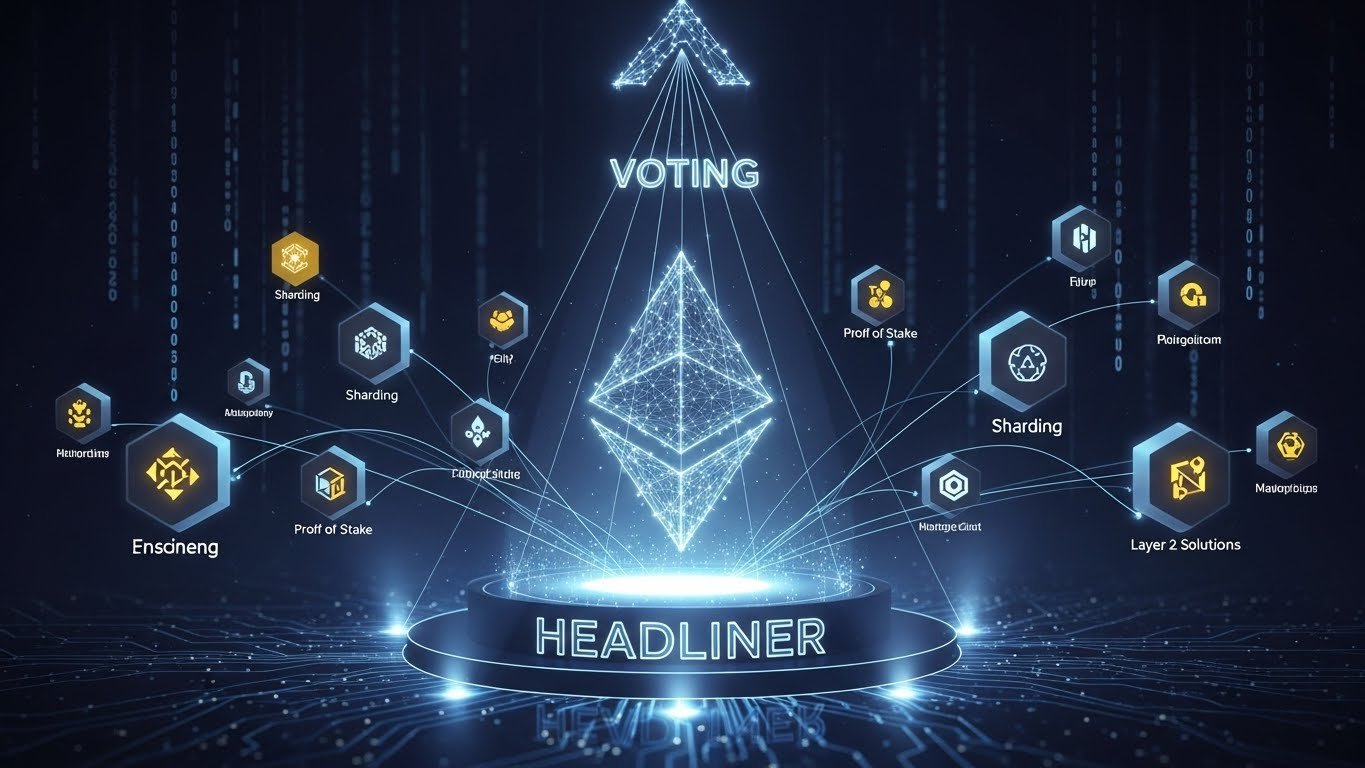
One of the most interesting elements of the Hegota planning process is the emphasis on “headliner” proposals. In simple terms, these are the flagship EIPs that will define the upgrade’s identity. Developers have described a structured proposal window beginning in early January 2026, followed by weeks of discussion and finalization through developer calls, with additional time afterward for non-headliner proposals.
This process matters because it gives the Ethereum community a clearer signal of what’s important and what’s experimental. In the past, Ethereum upgrades sometimes gained reputations for being unpredictable, with changes being added or removed late due to technical constraints. By defining “headliners” early, Ethereum aims to reduce last-minute surprises and give client teams enough time to implement and test changes thoroughly.
For beginners, this may sound like internal developer logistics, but it has real-world consequences. Clearer planning tends to mean fewer unexpected disruptions, smoother upgrades, and more ecosystem readiness. It also means exchanges, wallets, and DeFi protocols can anticipate changes and avoid emergency fixes.
Scalability, Efficiency, and the Push for a Lighter Ethereum
Hegota is expected to prioritize upgrades that improve how efficiently Ethereum processes and validates activity. Ethereum’s long-term approach to scaling depends heavily on Layer 2 rollups, but the base layer still matters because it is the settlement layer and the coordination point for data availability and finality. Even if users increasingly transact on rollups, the base layer must remain robust, affordable, and decentralized.
A major concern that developers frequently discuss is state growth—often called state bloat. As Ethereum is used more, the chain’s state grows, making it harder for node operators to keep up without strong hardware. If running a node becomes too difficult, decentralization weakens, and Ethereum risks becoming dependent on large providers. Discussions around Hegota in multiple reports highlight state management as a key theme, with potential solutions including tree structure upgrades like Verkle Trees that could reduce storage burdens and enable lighter clients.
Efficiency improvements also have a user-facing side. Better efficiency can mean smoother performance, improved gas predictability, and fewer congested “shock” moments during market volatility. While Ethereum may never become a zero-fee chain, upgrades that reduce friction can improve the user experience and help the ecosystem compete on usability.
Verkle Trees, Statelessness, and Why These Ideas Keep Coming Back
If you follow Ethereum development discussions, you’ll notice that certain concepts keep returning: statelessness, lighter nodes, and state expiry. These aren’t marketing words—they represent the deeper engineering work required to keep Ethereum decentralized while supporting global usage.
Verkle Trees are frequently referenced as a key building block for future stateless or semi-stateless clients. The big idea is that node operators could validate the chain with less stored data, relying on compact proofs instead of holding the entire historical state. That matters because decentralization is strongest when many independent parties can run nodes without enterprise infrastructure. Hegota is repeatedly associated in reporting with Verkle Trees and state optimizations, even if the final inclusion remains subject to the headliner selection process.
For users, this doesn’t immediately translate into “fees drop tomorrow.” But it does translate into resilience. A more stateless Ethereum is harder to censor, harder to monopolize, and easier to sustain. That is why these themes remain central to Ethereum’s long-term roadmap.
How Hegota Could Affect Ethereum Fees and User Experience
When people hear “upgrade,” they often ask one question: will fees go down? Ethereum fees are influenced by demand, block capacity, data availability, and the behavior of Layer 2 ecosystems. Hegota alone will not magically eliminate fee spikes, but it could improve the conditions that shape fee behavior—especially if it includes changes related to throughput, gas efficiency, or better state management.
Some reports and discussions highlight goals related to increasing the network’s ability to process gas per second and improving overall efficiency. If Ethereum can safely handle more activity at the base layer or improve how resources are priced, it may reduce extreme congestion moments.
It’s also important to recognize that Ethereum’s fee story is now deeply tied to Layer 2 rollups. If Hegota improves how rollups interact with Ethereum—whether through better data handling, more predictable costs, or smoother execution—users may feel benefits indirectly through cheaper rollup transactions and better bridging experiences. This is why L2 users should pay attention to base-layer upgrades, even if they rarely transact on mainnet.
What Hegota Means for Layer 2 Rollups and the Ethereum Ecosystem
Layer 2 rollups are Ethereum’s primary scaling path, and Hegota’s roadmap positioning implies it will likely continue supporting that strategy. Upgrades that improve base-layer efficiency, reduce state burdens, or optimize resource pricing can create better conditions for rollups to thrive.
Rollups depend on Ethereum for security and settlement. When Ethereum becomes more efficient and easier to validate, the entire rollup ecosystem becomes stronger. Developers building on rollups also benefit from predictable upgrade cadence because they can plan software changes and audits with more certainty.
Hegota’s role here is less about being a single “rollup upgrade” and more about being part of the infrastructure evolution that keeps Ethereum usable as a long-term base layer. In 2026, that matters enormously, because rollups are likely to become even more dominant for everyday users, and Ethereum’s ability to support them without over-centralizing is critical.
Institutional Perspective: Why Roadmap Clarity Changes Market Confidence
Institutional adoption is not just about spot ETFs or custody solutions; it’s also about confidence in infrastructure. Ethereum competes as a platform for tokenization, settlement, and programmable finance. Institutions are more likely to build or participate when roadmaps are predictable, upgrades are well-managed, and governance appears stable—even if decentralized.
The announcement that Hegota is already penciled in for late 2026, following Glamsterdam, sends a message that Ethereum is planning ahead and maintaining momentum. That kind of clarity can improve confidence for long-term infrastructure builders and investors who want to know the chain will continue evolving without constant uncertainty.
It also helps Ethereum’s broader narrative: Ethereum is not standing still. It is shipping upgrades, refining its approach, and building toward long-term goals like statelessness and sustainable decentralization.
Risks and Challenges: Why “Accelerating the Roadmap” Isn’t Always Easy
While the idea of speeding up upgrades sounds positive, it also introduces challenges. More frequent upgrades require tighter coordination across clients, better testing infrastructure, and faster ecosystem readiness. Exchanges, wallets, and major protocols must keep pace, which can strain smaller teams.
There’s also the challenge of scope. If upgrades become too small, Ethereum may struggle to deliver major structural improvements quickly. If upgrades become too frequent, the ecosystem may experience fatigue or increased operational risk. The goal is balance: move fast, but not recklessly.
Hegota’s headliner-selection approach and structured timeline appear designed to manage these risks. By narrowing focus early and giving teams time to align, Ethereum aims to keep the pace manageable. Still, the real test will come in execution, especially as more ambitious features—like state-related changes—often require deep engineering effort and careful coordination.
What Traders and Long-Term ETH Holders Should Watch Leading Into 2026
For traders, Ethereum upgrades often become catalysts—sometimes for actual network improvements, and sometimes simply for narrative momentum. The key is understanding that the market may price expectations well before the upgrade happens. That’s why Hegota being targeted for late 2026 can influence sentiment long in advance, especially if the headliner EIPs appear ambitious or strongly aligned with lower-cost scaling.
For long-term holders, the best approach is usually to track fundamentals: developer progress, ecosystem adoption, Layer 2 growth, and whether the upgrade cadence improves Ethereum’s reliability. Watching how Glamsterdam unfolds will also matter, because it sets the tone for Hegota execution and the broader “twice-yearly upgrade” era.
You don’t need to read every developer call to benefit from this. But paying attention to big themes—Ethereum roadmap, scalability upgrades, gas fee optimization, and state management—can help you understand how Ethereum is evolving and where the strongest long-term narratives may form.
Conclusion
Ethereum’s “Hegota” upgrade being slated for late 2026 is more than a headline about a future fork. It is a signal that Ethereum developers are accelerating the roadmap and reinforcing a more predictable, iterative upgrade rhythm. With Glamsterdam expected in the first half of 2026 and Hegota planned later in the year, Ethereum appears committed to shipping improvements on a steady schedule while continuing to pursue long-term goals like efficiency, decentralization, and scalable infrastructure.
While the final contents of Hegota will depend on headliner EIPs selected in early 2026, the early focus areas—state optimizations, efficiency, and potential Verkle Trees progress—hint at upgrades that could strengthen Ethereum’s foundation for the next phase of growth. For users, builders, and investors, the message is clear: Ethereum is building forward with urgency, and the network’s development culture is adapting to meet the needs of a global, always-on crypto economy.
Q: What exactly is Ethereum’s “Hegota” upgrade, and why are people talking about it so early?
Ethereum’s “Hegota” upgrade is a major planned network fork targeted for the second half of 2026, following the Glamsterdam upgrade expected in the first half of 2026. People are discussing it early because Ethereum developers are increasingly operating with a structured, forward-looking roadmap that aims for predictable upgrades twice a year. That approach encourages the ecosystem to prepare earlier, reduces uncertainty, and signals that Ethereum’s core teams are accelerating development rather than slowing down after recent upgrades.
Q: How will the Hegota upgrade be decided, and what are “headliner” EIPs?
Hegota’s contents will be shaped through a process in which developers select “headliner” EIPs first, meaning the main proposals that define the upgrade’s purpose and impact. The public process includes proposal submission windows and weeks of discussion before finalization, which helps prioritize key features early. For everyday users, this matters because it makes Ethereum upgrades feel more predictable and reduces the chance of major surprises late in the development cycle.
Q: Will Ethereum’s Hegota upgrade reduce gas fees and make transactions cheaper?
Hegota may improve conditions that influence gas fees, but it is not guaranteed to create immediate, dramatic fee reductions on its own. Ethereum fees are driven by demand, block capacity, and data availability, and in 2026 many users will primarily transact on Layer 2 rollups. If Hegota improves efficiency, resource pricing, or state management, users may feel indirect benefits through smoother network performance and stronger rollup economics. The upgrade is more about long-term scalability and sustainability than a quick fee-fix promise.
Q: What role do Verkle Trees and state bloat play in the Hegota upgrade narrative?
State growth, often called state bloat, is one of Ethereum’s biggest long-term challenges because it can make running nodes more expensive and threaten decentralization. Verkle Trees are frequently discussed as a possible step toward lighter clients and a more stateless Ethereum, allowing verification with less stored data. Hegota is being associated with these themes because Ethereum wants to scale while keeping node operation accessible, which protects censorship resistance and the network’s decentralized character over time.
Q: How should builders, investors, and everyday ETH users prepare for Hegota in 2026?
For builders, the best preparation is monitoring the headliner EIP selection process and understanding how proposed changes might affect infrastructure, node requirements, and smart contract environments. For investors, it’s useful to track roadmap credibility, execution quality, and ecosystem adoption rather than speculating solely on headlines. For everyday users, preparation is mostly educational: understanding Ethereum’s upgrade cadence, how rollups fit into scaling, and why long-term improvements like efficiency and state management matter for Ethereum’s ability to remain a leading smart contract platform in the years ahead.
